
Our New Top-Bar Training Center!
We are excited to announce the completion of our top-bar training cage! This structure has been sponsored by the Greenwich World Hunger Association, as part of our educational initiatives in top-bar beekeeping. The bee cage holds 3 top-bar hives, which will be utilized for hand-on trainings with village residents of Ololosokwan. Each hive sits on a hanging hive stand, so that the hives can be easily opened during demonstrations and trainings.
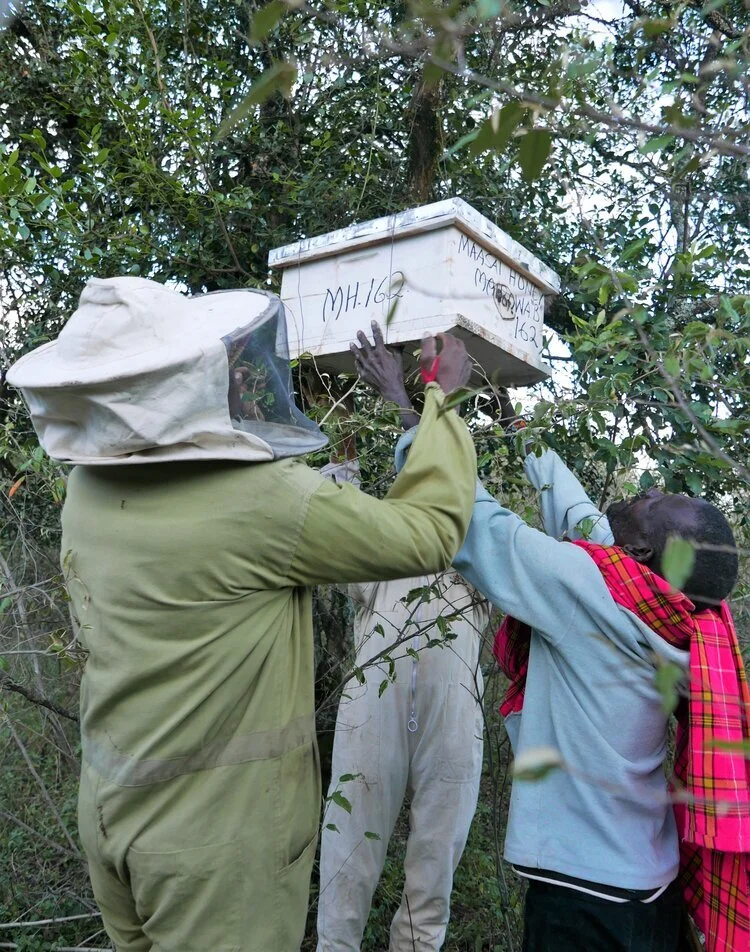
Beekeeping 101: Hanging Hives
When working with local bees, one of the first steps is hanging the hives. After baiting the frames with beeswax (a scent attractive to the bees), the hives are hung in a natural forest environment. Ideally, the hive is hung on a sturdy tree branch, under a canopy that shields and protects the hive.

The Health Benefits of Honey
Honey has long been revered, not only for its delicious flavor, but also for its health benefits. Records of its use date back to the stone age; scientists estimate that people have been using honey for over 9000 years! Hippocrates in the 5th century B.C. extolled honey for its healthful properties, including the food in his famous advice, “let food be thy medicine and medicine be thy food.” Still to this day, honey is used all over the world as a nutritious food and health remedy.

Where does "stingless" honey come from?
Not all honey is the same. In fact, one of our honeys is usually referred to as “stingless” honey. It has a liquid consistency and a distinctive sweet and sour flavor. Where does it come from? It is made by stingless bees! These bees do not make wax honeycomb, but rather, they store their liquid honey in round, resinous pods. Harvesting is a tedious process, but the result is well worth it…